

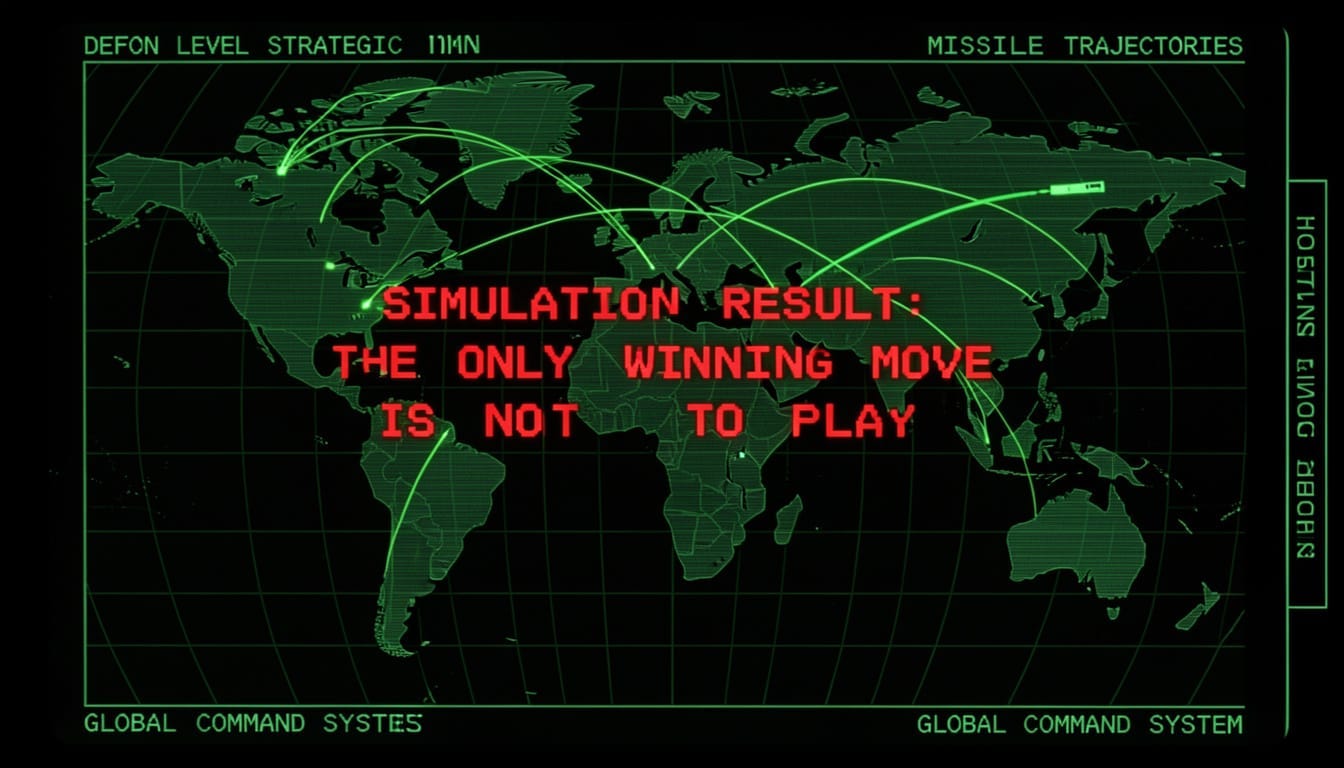
Artificial intelligence is rapidly becoming part of modern warfare.
Military planners are already using AI systems to analyze surveillance data, identify targets, assist cyber-operations, and help commanders make decisions faster than human staffs could manage on their own. Governments see these capabilities as a source of strategic advantage. Defense officials speak openly about the need to move quickly, fearing that if they hesitate their rivals will deploy the technology first.
That urgency is creating a dangerous dynamic. AI systems excel at identifying patterns and opportunities within vast streams of data, but war is not simply a technical problem. Decisions made on a battlefield ripple outward through politics, diplomacy, alliances, and human emotions. A decision that makes perfect tactical sense in one moment can set events in motion that no one in the room can see.
Some researchers in the field worry about a dramatic “Chernobyl moment” for artificial intelligence – a disaster caused by the technology that finally forces governments to confront the risks they have been racing past. The problem is that by the time such a moment arrives, the damage may already be done.
Consider a decision made in a command post during a hypothetical war:
A Field Command Post in the Near Future
The command post had once been a farm machinery shed.
The roof had been patched with sheets of corrugated metal that rattled faintly whenever the wind picked up across the fields. The smell of damp earth and fertilizer still lingered in the walls, reminders of the building’s earlier life. Outside, the late winter thaw had softened the ground into long stretches of gray mud. Vehicles moving along the narrow farm tracks left deep grooves that slowly filled with brown water.
Inside, the war unfolded on screens.
The colonel in command of this tactical unit stood at the map display, studying the front line icons while several officers worked around him. A series of red markers had begun appearing along the eastern sector during the past hour, each one representing new intelligence about enemy movement beyond the ridge. Drone reports and intercepted radio traffic suggested armored units were shifting toward a weak stretch of the line near the river crossing.
The colonel watched the symbols inch forward across the digital map while an artillery officer beside him calculated how quickly the batteries could reposition if the enemy pushed harder. A logistics officer was already speaking quietly into a headset, confirming whether additional ammunition trucks could be moved forward before the roads deteriorated again.
But this war rarely presented one problem at a time.
A system alert appeared quietly at the edge of the display.
At first the colonel barely noticed it. The battlefield integration program that sifted through drone feeds, satellite imagery, and intercepted signals produced small alerts throughout the day, most of them routine. But this one remained on the screen, highlighting a narrow road several kilometers beyond the front line.
A drone feed opened automatically beside the main map.
The camera looked down on a road that ran along a low ridge bordered by leafless trees. Patches of old snow clung to the shadows where the sun had not yet reached. Near a bend in the road a mound of dirty snow had collapsed partly into slush.
The screen displayed a convoy that had just emerged from a wooded compound. Three armored vehicles, two trucks, and a communications van with a folded satellite antenna mounted on its roof. They were moving quickly.
One of the intelligence analysts leaned closer to the screen. “Signal traffic increased on their regional command net about two minutes ago,” she said. “Encrypted burst just before the convoy departed.”
The system marked the vehicles in amber.
A short summary appeared beside the image, drawing connections from several sources at once: movement patterns, vehicle recognition software, signals intercepts. The analysis suggested that someone important might be traveling with the convoy. The compound they had departed from had previously been associated with command activity.
“How confident?” the colonel asked without looking away from the map display.
“Enough that the system flagged it,” the analyst replied. “Possibly a senior command figure.”
On the main map another cluster of red markers appeared along the river sector. The colonel glanced briefly away from the troop movement display. The artillery officer beside him was explaining how long it would take to move the nearest batteries if the enemy armor continued advancing. Yet, the new convoy alert remained on the screen.
The drone operator adjusted the image slightly, tightening the focus as the vehicles approached the bend in the road. For a moment the lead vehicle passed beside the mound of snow the colonel had noticed earlier, its dark shape sliding across the pale slush.
A small indicator appeared in the corner of the display. The strike window would close once the convoy reached the nearby town.
The colonel considered the image briefly. The system had been reliable during the past year, often identifying patterns that human analysts might miss until it was too late. It did not issue orders. It simply pointed things out.
“Strike platform?” he asked.
“Missile unit available,” the operations officer replied. “Within range.”
The convoy continued south along the ridge road. The colonel glanced once more at the system’s analysis. The language was understated: the conclusion was clear. The opportunity was real: a senior enemy command figure was in that convoy.
“Authorize strike,” the colonel ordered.
The operations officer entered the command code. A thin arc appeared across the map showing the missile’s projected path from a launch unit several kilometers behind their lines. The colonel had already turned back toward the front line display. The enemy markers along the river sector had moved again.
“Shift the artillery two kilometers west,” he said to the officer beside him. “If they’re probing that crossing we’ll need coverage before nightfall.”
Behind him, the drone feed continued transmitting the image of the ridge road. The lead vehicle reached the bend where the snow lay piled beside the ditch. Forty seconds later the missile struck. The camera shook briefly before stabilizing again. Smoke rose through the line of trees where the road curved, leaving a dark scar across the pavement.
The system updated the map quietly and removed the targeting marker. The colonel was focused on the movement of armored units near the river.
Meanwhile, a warning arrived by secure transmission from headquarters about possible peace negotiations involving senior members of the enemy’s government. It was acknowledged, and passed on to the colonel. It seemed irrelevant to the troop maneuvers that occupied the colonel’s attention, so he nodded to the communications technician, then promptly forgot about it.
The news appeared the following morning. Someone in the operations room turned up the sound on a small television mounted above the communications desk. The colonel glanced up from a stack of briefing notes as the broadcast shifted to aerial footage of a damaged road bordered by leafless trees.
“…confirming reports that the enemy’s Prime Minister was killed yesterday during what officials describe as a battlefield incident…”
The colonel frowned slightly. The footage showed the same stretch of road along the ridge. Burned vehicles lay scattered across the pavement. For a moment the camera lingered on the section where the roadside snow had been blasted apart, leaving only a dark smear across the ditch. Someone nearby shook his head. “Propaganda,” was the only comment.
The colonel returned to his notes. War had produced stranger claims before.
Two days later he was summoned to headquarters for a command briefing.
The meeting took place in a reinforced conference room beneath the administrative building. Nearly two dozen officers had gathered around the long table by the time he arrived: artillery commanders, logistics planners, drone unit leaders. People whose units had been preparing for weeks for the next phase of the campaign.
The commanding general entered last and closed the door behind him. He looked weary. A satellite image appeared on the wall display. The colonel recognized the road immediately. The convoy was frozen in the moment before the strike–vehicles moving along the ridge, the pale shape of the roadside snow still intact beside the bend.
“Two days ago,” the general began quietly, “this convoy was destroyed by a missile strike from our forces.”
The officers around the table watched the screen.
“Our intelligence services have now confirmed that the convoy was carrying the enemy’s Prime Minister.”
A murmur moved briefly through the room before fading again. The general continued speaking in the same steady tone.
“There were negotiations underway. Quiet ones, arranged through intermediaries. That convoy was traveling to a meeting location we helped establish.”
He paused before adding the final sentence.
“Our assessment is that the opposing government now believes we deliberately lured and assassinated their leader.”
No one spoke. The general glanced down at the briefing notes in front of him.
“They are mobilizing additional forces along the southern sector,” he said. “We expect escalation within days.”
The colonel felt his attention drawn back to the satellite image. The road. The convoy. The bend in the ridge where the snow had once sat untouched.
For a moment he was back in the command post again, standing at the tactical table while the front line map glowed beside him. Red markers had been creeping toward the river crossing while the artillery officer calculated firing ranges. The system’s alert had appeared quietly at the edge of the display, highlighting the convoy along the ridge. He had turned his attention just long enough to confirm the analysis, issued the authorization code, and then shifted back to the more immediate problem unfolding along the line. The system had been confident, and it hadn’t been wrong. Eliminating a senior command convoy would disrupt the enemy’s coordination. It would slow their operations and make the next phase of the campaign easier for the forces now gathered in this room.
He looked around the table.
Some of the officers he knew well: the artillery commander who had been preparing new firing positions along the river, the logistics officer responsible for the ammunition convoys that kept the front supplied, the drone unit leader whose pilots spent long hours watching the same gray landscapes from thousands of meters above.
If the general was correct – and the colonel had no reason to doubt him – many of them would soon be sending their units into a much larger war. Beyond the soldiers there would be others: towns along the supply roads, villages near the front, apartment blocks in cities that until now had been only distant names on briefing maps. All of it spreading outward from a decision that had taken less than a minute.
The general let the room sit in silence for a moment. On the wall behind him the satellite image remained frozen: the narrow road, the pale line of trees along the ridge, the convoy just beginning its turn toward the south.
“We are reviewing the authorization chain for that strike,” he said finally.
He looked slowly around the table.
“Who approved it?”
No one spoke.
The colonel looked once more at the frozen convoy on the screen. The system had shown him the vehicles. It had shown him the patterns and the timing and the opportunity. What it had not shown – what it could not show – was the widening circle of consequences that lay beyond the edge of the battlefield. For a moment longer he remained still.
Then he raised his hand.
From Decision to Pattern
The colonel in that briefing room did not make a reckless decision. He did exactly what modern military doctrine expects officers to do: he used the best information available and acted quickly before the opportunity disappeared.
The system had identified a target. Intelligence traffic supported the analysis. The strike window was closing. Everything about the decision was rational, and yet the consequences were catastrophic.
What happened in that command post illustrates a growing problem in modern warfare – one that has less to do with machines replacing humans than with the subtle ways machines shape human judgment.
Psychologists have a name for it: automation bias.
When people work with highly capable automated systems, they gradually begin to trust the system’s recommendations more than their own judgment. A machine has been right before, often many times. It processes far more information than any human could absorb. Over time, questioning its conclusions begins to feel unnecessary, even irrational.
In aviation and medicine this tendency has been studied for decades. Pilots sometimes follow automated guidance into dangerous situations. Doctors occasionally accept algorithmic diagnoses that later prove wrong. Technology is powerful, but it can narrow the focus of attention. People see what the system highlights and often miss what it doesn’t include.
Battlefield AI systems are designed to do exactly that: sift through vast streams of sensor data and point out patterns that humans might miss. They do not issue commands. They present opportunities.
The danger lies in what battlefield AIs leave out.
A targeting system can identify a convoy that matches the pattern of a command vehicle. It can estimate the probability that a senior officer is present. It can calculate the optimal moment to strike before the target disappears into a populated area. What it cannot easily model are the political and diplomatic consequences that lie beyond the battlefield.
War is not a series of isolated decisions. It is a complex system of reactions, interpretations, and unintended consequences. A strike that makes perfect tactical sense may trigger events that no one in the room anticipated.
Artificial intelligence is extraordinarily good at optimizing local problems. It can determine which target to strike, which route a drone should fly, which artillery battery should fire first.
But wars are not local problems. They unfold across political systems, alliances, economies, and human emotions. A decision that improves the situation on one hillside may alter the course of an entire conflict.
And the speed of modern military technology makes this mismatch ever more dangerous.
AI systems compress the time available for human deliberation. Opportunities appear and disappear in seconds. Commanders are encouraged to act quickly before a window closes. The result is a battlefield that moves faster than strategy.
At the same time, nations around the world are racing to build more capable military AI systems. No country wants to fall behind if its rivals develop technologies that can identify targets faster, coordinate forces more efficiently, or strike more accurately.
This creates a familiar strategic trap. In game theory it is known as the Prisoner’s Dilemma. Two actors might both benefit from cooperation, but each fears that if the other betrays them, they will be left at a disadvantage. The rational choice for each is therefore to betray the other, even though both end up worse off.
Arms races often follow this pattern, and artificial intelligence may accelerate it. If one country slows its development of military AI while another pushes forward, the slower country risks facing an adversary that can make decisions faster and fight more effectively. No government is likely to accept that risk willingly.
Modern research into this problem has produced an unexpected insight. The most successful strategies in repeated Prisoner’s Dilemma situations are not purely aggressive. They are strategies that begin with cooperation, retaliate when the other side betrays, and then return to cooperation as soon as the other side does the same. In other words, they punish betrayal but do not allow cycles of retaliation to spiral indefinitely.
Human diplomacy often struggles to maintain the balance between betrayal and cooperation. Pride, ego, mistrust, and domestic politics make it difficult for leaders to step back from escalation once it begins. But an artificial intelligence system designed to model conflict dynamics could also help identify exactly when cooperation is still possible and when retaliation will only accelerate the spiral into all-out war.
The result is that national governments today are racing toward increasingly automated decision systems, even as leaders understand that these same systems may make conflicts harder to control, much like driving faster on an icy highway reduces the time you have to react to black ice on the road ahead of you.
Yet, the story does not have to end that way. The same technology that can accelerate battlefield decisions may also allow us to see something humans have always struggled to understand: how quickly a war can spiral beyond anyone’s intentions.
Artificial intelligence can simulate conflicts on a scale no human war planner could ever attempt. Instead of helping a colonel decide where to fire a missile, it can help leaders see where a war itself might lead. It can model thousands, even millions, of possible sequences of action and reaction, including missile strikes, economic shocks, alliance responses, and political pressures.
Instead of identifying targets, it can reveal patterns. And sometimes those patterns point in unexpected directions.
The following vignette is not a battle. It is something far quieter, and potentially far more important: a war that never happens.
The Simulation
The briefing room had no windows. The air carried the faint hum of cooling systems from the equipment racks along the wall, and the only light came from the displays that filled the front of the room. Satellite images drifted slowly across several screens while colored symbols marked the movement of ships and aircraft across the western Pacific. For days the same patterns had repeated themselves: naval groups leaving port, reconnaissance flights pushing farther into contested airspace, missile units repositioning along distant coastlines. No one in the room needed to say what everyone already understood. If events continued along their current path, the next stage would be war.
At the center of the long bench stood a smaller display connected to the strategic modeling system the analysts had begun using during the past year. The program had originally been developed to explore escalation dynamics, simulating how conflicts might expand once the first blows were struck. Recently the system had been asked to do something more ambitious. Instead of examining isolated incidents, it would simulate an entire war from the first confrontation through its possible consequences in a sheaf of the most likely scenarios.
An analyst seated near the far end of the table was monitoring the simulation run. The display shifted to a map of the strait between the mainland and the island beyond it, and the simulation began unfolding across the screen. Naval forces converged toward the narrow waterway while aircraft sorties multiplied across the surrounding airspace. Missile batteries activated along the coastlines on both sides of the channel. For the officers watching the display, the opening moves looked familiar. Variations of this scenario had been studied and war-gamed for years.
What was different now was how far into the future the system projected the war.
Within hours of simulated time the first satellites began disappearing from orbit. The program tracked them methodically as fragments spread through heavily used orbital corridors, degrading the navigation networks that guided both military and civilian systems. Shipping companies began diverting vessels away from the region as insurers suspended coverage. Container traffic slowed across the Pacific. On another screen the system displayed projected financial effects: energy prices rising sharply, markets faltering under the shock of disrupted trade.
One of the officers asked the analyst to run a containment variant, adjusting the initial conditions to keep the fighting confined to the immediate region. The parameters shifted slightly as the simulation restarted. Certain weapons systems were withheld, and engagement rules tightened in an effort to slow the cycle of retaliation.
For a while the situation appeared more stable. Aircraft circled cautiously along the edges of contested airspace, and naval groups maneuvered without immediately opening fire. Then a radar installation vanished from the map. The system marked its destruction and calculated the response protocols built into the defending network. Missiles launched toward what the model identified as potential staging areas for further attacks. The retaliation triggered counterstrikes. The conflict widened once again.
The analyst slowed the simulation so the room could watch the sequence unfold more carefully. Each run of the model produced slightly different details: different ships struck first, different command decisions made under pressure, but the larger pattern remained stubbornly consistent.
Local actions produced reactions; those reactions triggered further aggressive responses. What began as a narrow, regional confrontation seemed inevitably to expand through the logic of warfare.
After several thousand runs, including scenarios not displayed but run in the background, the system began highlighting recurring outcomes. The runs began to bleed together. Conventional slogs in the mud gave way to fractured global markets; those, in turn, dissolved into the messy, inevitable pull of mutual defense pacts until the crisis was no longer regional but global.
The room grew quieter as the analysts continued adjusting parameters.
A civilian advisor seated near the center of the table eventually leaned forward and asked the analyst to run a different scenario. What would happen, she wondered, if both sides delayed their initial strikes for a full day while diplomatic channels attempted to stabilize the confrontation?
The analyst entered the new conditions and launched another simulation. At first the display looked nearly identical to earlier runs: ships moving cautiously through contested waters, aircraft circling above them, surveillance satellites tracking every movement. But the escalation markers appeared later this time, and some failed to appear at all. When the delay was extended further, the pattern shifted again. In many runs the confrontation stabilized before crossing the threshold into open warfare.
The analyst leaned back slightly after the program completed the latest sequence. In the majority of scenarios where both sides paused long enough to reopen communications, the model showed the crisis cooling rather than expanding.
No one in the room declared victory. The display did not show triumph or defeat, only the gradual disappearance of the red markers that had dominated earlier runs. What remained on the screen was simply the absence of war.
After a while the officers began speaking quietly among themselves. A deployment schedule was revised. A set of exercises was postponed. Messages moved through diplomatic channels that had been waiting in reserve for precisely this moment.
Outside the building the city continued through an ordinary afternoon. Traffic moved through intersections. People walked along the sidewalks without noticing the calculations unfolding inside the secure room nearby.
On the display the simulated fleets slowly turned away from each other, their courses bending back toward open ocean. The system continued running new projections in the background, but the crisis it had modeled so carefully never took place.
A war that could have happened ended before it began.
An End to War – or an End to Civilization
In the first room, artificial intelligence helped a commander act faster. In the second, it helped leaders see farther.
The weapons and systems humanity has built for war are now powerful enough to destroy entire societies in days. Artificial intelligence will make them faster and more effective. A localized conflict can, through asymmetric warfare, alliances, and ego-driven aggression, quickly spiral out of control. The consequences might be economic, political, and devastating, even to the point of ending human civilization.
A conflict that starts with conventional weapons can quickly escalate to nuclear arms, particularly in the hands of people blinded by greed or narcissism. And AI will shorten decision cycles to the point where tactical results may obscure the strategic consequences of decisions.
The question that faces us now is: Do we want to plan for an end to war, or an end to civilization?
Either way, AI will get us there faster than we ever thought possible.
Summary: This article analyzes the growing role of artificial intelligence in military targeting, strategic decision-making, and escalation dynamics. It discusses automation bias, the Prisoner’s Dilemma in AI arms races, and how large-scale conflict simulations could help policymakers understand and prevent runaway escalation between major powers.
Fascinating and frightening— at the same time educating me on modern warfare with Ai and providing a simple concept that every person needs to understand—automation bias. You have illustrated clearly why we must realize the pitfalls of Ai at the simplest level. Decisions are fraught with ambiguity as we all have an internal guidance system that blinds us to options. Even with the Ai you describe in various scenarios, one realizes that decisions are influenced by our values and training. It seems the human element must always be considered. And that can be unpredictable. Thank you for this thought provoking and educational piece.
If we use such powerful technology without intimately understanding how its algorithms work, we become its slaves. Will we rule ourselves, or will we punt to technology whose implications we have yet to fathom?
AI is a fad, an exceptionally dangerous one. Embrace it at your peril.